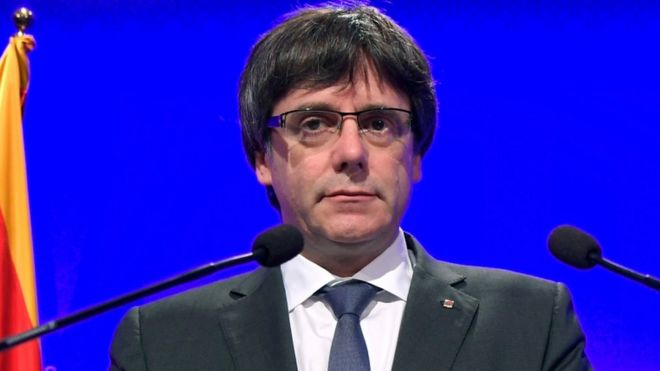
Image copyrightAFP/GETTY IMAGESCatalonia's leader Carles Puigdemont says the region has won the right to break away from Spain
The drive for independence that delivered the banned 1 October
referendum did not begin under his leadership. But such is his zeal
for secession, that Catalonia's President Carles Puigdemont is
prepared
to risk its existing autonomy to achieve it.
In defiance of the law and Spain's constitution, he has pushed forward in
the
hope of international recognition.
It may well be a doomed journey in the eyes of Spain's allies in Brussels
and Washington - but the meek-looking village baker's son from Girona is
undaunted.
The drive for independence that delivered the banned 1 October
referendum did not begin under his leadership. But such is his zeal
for secession, that Catalonia's President Carles Puigdemont is
prepared
to risk its existing autonomy to achieve it.
In defiance of the law and Spain's constitution, he has pushed forward in
the
hope of international recognition.
It may well be a doomed journey in the eyes of Spain's allies in Brussels
and Washington - but the meek-looking village baker's son from Girona is
undaunted.
Born in Amer in 1962, he grew up under the dictatorship of Gen Francisco
Franco and was taught in Spanish at a church-run boarding school, but
spoke Catalan at home like others of his generation.
Joan Matamala, a few years his senior at the school, remembers the boy
everyone got on with, even the older pupils.
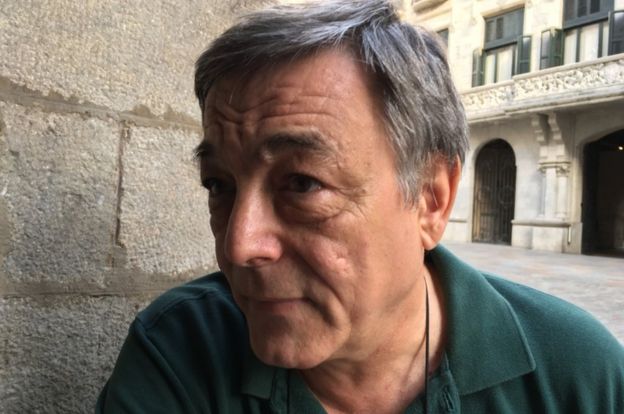
Image captionBookseller Joan Matamala went to school with Carles Puigdemont 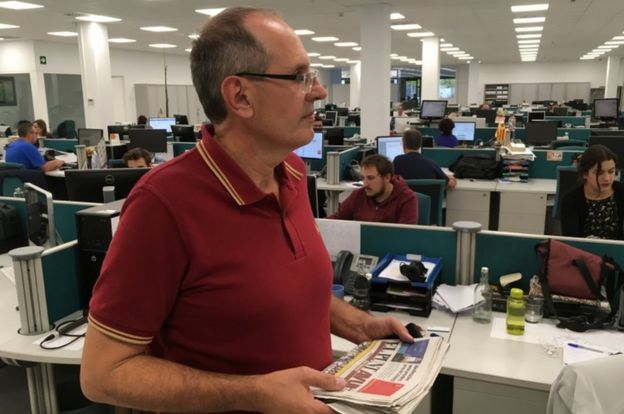
Image captionMiquel Riera worked with Carles Puigdemont at the pro-independence newspaper nowknown as El Punt Avui
Media caption
Mr Puigdemont served as mayor of Girona from 2011 until 2016 when he
was elected regional president of Catalonia.
There is no denying his star appeal among his supporters, who clamour to
take selfies with him at rallies.
His popularity cuts across class, coming as he does from comparatively
modest origins, outside the Catalan elite which dominated the local
centre-right alliance, Convergence and Union (now known as the Catalan European Democratic Party), for years.
"Puigdemont has been absolutely key to bringing Catalonia to where we
are
now," says Montse Daban, international chairperson of the Catalan
National Assembly, a grassroots pro-independence movement.
"He's been an absolute and positive surprise for Catalan citizens, who
were
already supporting the independence process and saw with dismay
that it
was facing several burdens."
Image captionBut his actions have brought him into conflict with Spanish law. And in the eyes of Spain's government, the Catalan leader has ruthlessly created a crisis, burning all the bridges in order to make a unilateral declaration of independence. 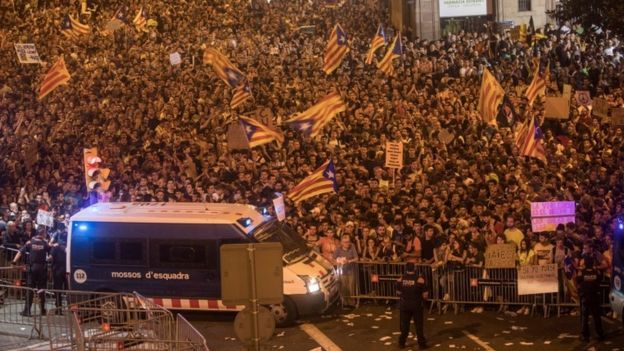 Image copyright
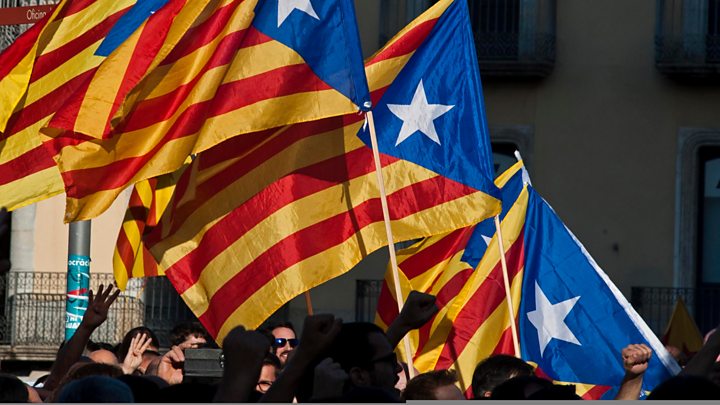
Image captionGetty ImagesThousands protested in Barcelona after the 1 October referendum was marred byviolence
Born in Amer in 1962, he grew up under the dictatorship of Gen Francisco
Franco and was taught in Spanish at a church-run boarding school, but
spoke Catalan at home like others of his generation.
Joan Matamala, a few years his senior at the school, remembers the boy
everyone got on with, even the older pupils.
Mr Matamala runs a bookshop, Les Voltes, that has been promoting
Catalan language and culture in Girona for 50 years. The young
Puigdemont
did not come over as a natural leader at the time but he was someone
you
did not forget, he says.
As a young man, Puigdemont had a passion for his native tongue,
going on to study Catalan philology at the local university and polishing
colleagues' copy
when he first found work in the city's newspapers.
Miquel Riera worked with him at the fiercely pro-independence paper now
known as El Punt Avui, often late into the night.
"Right from the start he was very interested in new technology and
the internet," says Mr Riera. This may have fed Puigdemont's awareness
of social media,
which was crucial in promoting the referendum campaign.
"He's a man who makes friends easily," says Mr Riera, whose 25-year-old
son,
he says, was bruised on the chest by a police rifle butt at a polling station
on Sunday.
Mr Puigdemont served as mayor of Girona from 2011 until 2016 when he
was elected regional president of Catalonia.
There is no denying his star appeal among his supporters, who clamour to
take selfies with him at rallies.
His popularity cuts across class, coming as he does from comparatively
modest origins, outside the Catalan elite which dominated the local
centre-right alliance, Convergence and Union (now known as the Catalan European Democratic Party), for years.
"Puigdemont has been absolutely key to bringing Catalonia to where we
are
now," says Montse Daban, international chairperson of the Catalan
National Assembly, a grassroots pro-independence movement.
"He's been an absolute and positive surprise for Catalan citizens, who
were
already supporting the independence process and saw with dismay
that it
was facing several burdens."
"Democracy is not about voting - there are referenda in dictatorships too,"
a
Madrid government source told the BBC. "Only when you vote with
guarantees according to the law is it a democracy."
The images of violence at the polling stations were "150% part of
Puigdemont's plan", the source said.
"It's unfortunate because it was a trap. There's no doubt it looks bad for
the Spanish government."
Image copyright


No comments:
Post a Comment