Buzz of drones more
annoying
than any kind of vehicle
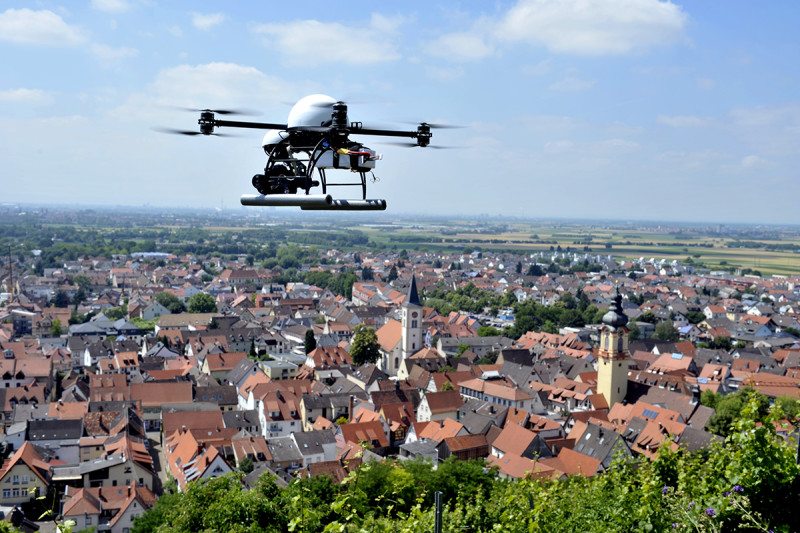
Wolfgang Steche/VISUM/eyevine
delivery services may be heading for a discord.
A preliminary NASA study has discovered that people find the noise
of drones more annoying than that of ground vehicles, even when the
sounds are the same volume.
of drones more annoying than that of ground vehicles, even when the
sounds are the same volume.
“We didn’t go into this test thinking there would be this significant
difference,” says study coauthor Andrew Christian of NASA’s Langley
Research Center, Virginia. It is almost unfortunate the research has
turned up this difference in annoyance levels, he adds, as its purpose
was merely to prove that Langley’s acoustics research facilities could
contribute to NASA’s wider efforts to study drones.
difference,” says study coauthor Andrew Christian of NASA’s Langley
Research Center, Virginia. It is almost unfortunate the research has
turned up this difference in annoyance levels, he adds, as its purpose
was merely to prove that Langley’s acoustics research facilities could
contribute to NASA’s wider efforts to study drones.
Nonetheless, the results indicate the extra irritation the 38 subjects
experienced when listening to drone noises was as if a car were
suddenly twice as close as it had been before.
experienced when listening to drone noises was as if a car were
suddenly twice as close as it had been before.
It isn’t yet clear why drones sound so annoying. Participants didn’t
know they were listening to drones and were unaware of the study’s
purpose. All they knew was that they were hearing sounds related to
“the future of transportation”, and Christian says only an expert or
enthusiast could identify drones by sound alone.
know they were listening to drones and were unaware of the study’s
purpose. All they knew was that they were hearing sounds related to
“the future of transportation”, and Christian says only an expert or
enthusiast could identify drones by sound alone.
Loitering in the street
One reason for the difference might relate to how slowly most
commercially available drones move. A drone takes a lot longer to
pass by than a car travelling down a residential street, he says, and
a common complaint was how the drone sounds seemed to loiter.
“That could be a big part of it.”
commercially available drones move. A drone takes a lot longer to
pass by than a car travelling down a residential street, he says, and
a common complaint was how the drone sounds seemed to loiter.
“That could be a big part of it.”
If so, this might offer hope to Amazon, as the commercial drones
included in the study are slower than those the company is developing,
which are planned to reach about 95 kilometres per hour. “Our drones
fly at a high altitude, well above people and structures,” says an Amazon
spokesperson. The company is also working on making them quieter.
included in the study are slower than those the company is developing,
which are planned to reach about 95 kilometres per hour. “Our drones
fly at a high altitude, well above people and structures,” says an Amazon
spokesperson. The company is also working on making them quieter.
However, Christian points out that simply making drones “only as noisy”
as delivery trucks would still mean they are more annoying, meaning
companies may need to find ways to make their drones significantly
quieter than ground vehicles.
as delivery trucks would still mean they are more annoying, meaning
companies may need to find ways to make their drones significantly
quieter than ground vehicles.
His hope is that NASA can help companies solve the problem before
the inevitable complaints begin, perhaps by creating noise-aware systems
that allow a drone to detect how loud it is, how near it is to people
and how annoyed they are likely to be, and then modify its flight
path accordingly.
(New Scientist)



No comments:
Post a Comment